

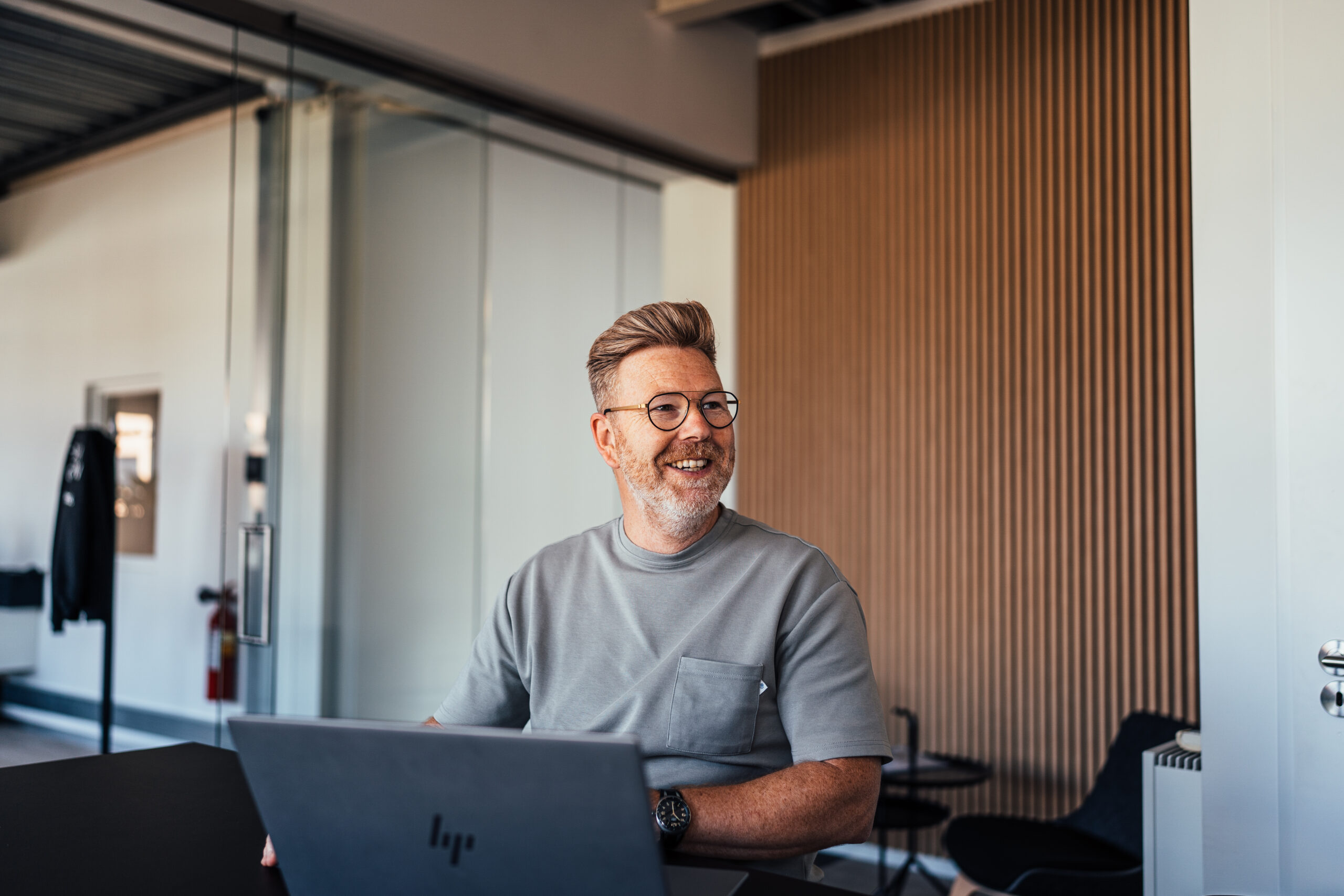
Sustainability; a term that comes up more and more often and on which everyone holds an opinion. It is clear that companies recognise its importance for various reasons. In this article, John Driessen, product designer in the Design & Development department, explains how CREON approaches sustainability.
For years, sustainability has occupied an increasingly important role in companies’ operations. By investing in sustainable products, transport and/or waste management, a company reduces its ecological footprint. CREON is also committed to complying with CSR guidelines.
‘Our mission is to make the world a little safer and better every day with our products and services. Sustainability is an important theme in that. As a company, you also have to take responsibility for that. Moreover, with a sustainable approach, you create the image of being an attractive employer,’ John says.
Increasing demand
Thus, CREON’s ambition is to work in an increasingly sustainable way, although clients are also critically looking at the topic. According to John, sustainability plays an important role in many clients’ issues these days.
‘From our clients, there are an increasing number of requirements around sustainability. We are asked to take the initiative in developing products further. Consequently, the entire process is looked at critically. For instance, how do we deal with products that need to be replaced in the future? How do we deal with transport? That kind of questions a client would like to have answered,’ John explains.
Sustainability in control rooms
CREON is always in control when it comes to the design of dispatch and control rooms. The key feature of such a control room is that it is always functioning, 24 hours a day, 7 days a week. Constant supervision is maintained from one or more ergonomic workstations and a quick response is possible during (emergency) situations. This requires products that are durable. The modular SMART is the first workstation specifically designed as a sustainable 24/7 solution.
‘Our products are mostly made of steel, aluminium and synthetic materials. These are recycled materials, but at the end of their lifespan they can also be recycled well,’ says John. The products last 10 to 15 years and are then also recycled. Very sustainable, so to say.
Always in search of new solutions
Innovation is an important key point for CREON, which is why the team is always looking for ways to work even more sustainably. This often results in new insights. ‘Sometimes we reject a product, such as a worktop with a small uneven finish. Initially, we would then make a new product, because we don’t want to deliver rejected products to the customer,’ says John. With sustainability in mind, a different approach is now often taken.
‘Technically and functionally, the product is 100% fine. So why discard it immediately? Throwing it away and replacing it also leads to extra transport and connecting machines. When we discuss this with the customer, they actually appreciate that we look at the product from this perspective. Instead of having it disposed of, we then often get to deliver the product anyway,’ John continues.
With ways like this, CREON, in collaboration with the client, always manages to choose the sustainable solution. ‘Whether it’s our mechanics or the finance department, we all try to participate when it comes to sustainability. We keep working on that all the time,’ John concludes.
