Want to stay updated?
Sign up for our newsletter
A contract sets out agreements. But changes are inevitable in a partnership that spans several years. Technology develops, users’ needs change, and each project brings new considerations. What matters is how you deal with those changes together.
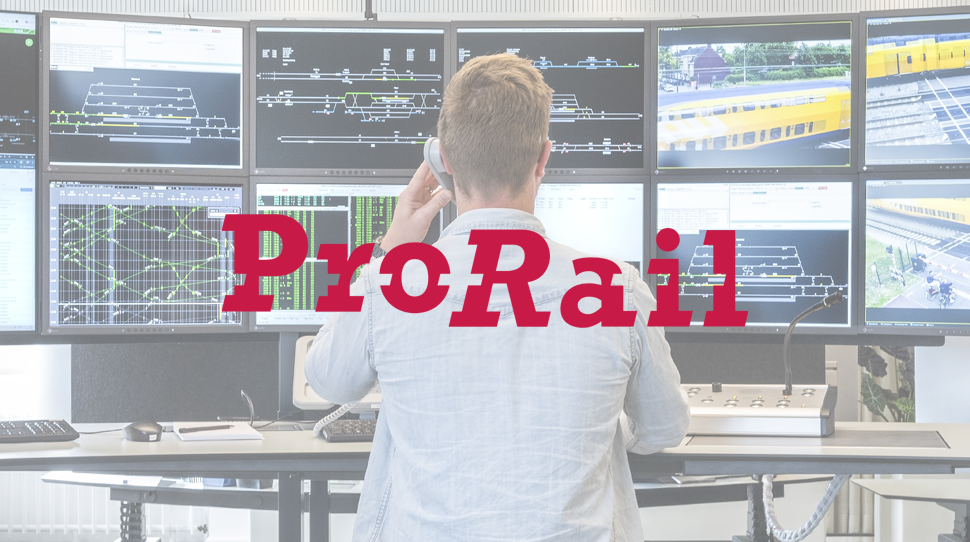
Since 2024, ProRail and CREON have worked together on the fit-out and management of 15 sites across the Netherlands, including 12 rail traffic control rooms. CREON supplies the specialist workstations and 24/7 chairs. Our involvement extends from engineering and project coordination to preventive and corrective maintenance. We spoke with Maarten Leerkotte, contract manager at ProRail, and Jasper Reims, product manager at ProRail, about how this long-term partnership works in practice.
For ProRail, the partnership with CREON began with a clear ambition: to standardise the workstations across its rail traffic control rooms as much as possible. There is a practical reason for this. Rail traffic controllers need to be able to work at different sites and rely on a familiar working environment wherever they are. At the same time, their work places high demands on the fit-out. Ergonomics, adjustability, monitor arrangements and technical facilities all need to support sustained concentration. These requirements were set out in a detailed specification. But that does not mean every detail is fixed for years to come.
“We make a very deliberate choice to build long-term relationships with our suppliers,” says Leerkotte. Within those relationships, ProRail expects suppliers to contribute their own expertise. “Our suppliers are the specialists in their field. We’re specialists in rail.”
For CREON, that role means looking beyond what is requested on paper. We also consider whether something is technically feasible, how a decision will affect the fit-out and where difficulties might arise. This becomes particularly important when the situation on site differs from what was expected.
During a site survey for a project in Maastricht, for example, the existing desk configuration turned out to be different from the one anticipated. Identifying this on site meant the solution could be adjusted before the new workstations were delivered.
Technical requirements can also change during the term of a contract. New cable requirements and controls built into the desktop, for instance, needed to be integrated. Rather than making those changes on site during the refurbishment, they were incorporated into the engineering beforehand. This helped limit the impact on the operational environment. For Reims, spotting such points before they cause problems later in the process is an important part of the partnership.
Standardisation does not mean every solution remains exactly the same for years. Since the partnership began, ProRail’s standard workstation has been adapted several times. New insights are discussed, developed into technical solutions and, where necessary, tested first.
For a project in Zwolle, a test setup is being used to assess an adapted solution in practice before it is finalised. In this way, the standard evolves with the needs of the workplace. ProRail contributes its knowledge of the railway, its organisation and its users. CREON brings expertise in ergonomics, engineering and 24/7 working environments. That combination matters, according to Leerkotte: “Ultimately, our supplier is the specialist.”
A contract covering 15 sites calls for expertise, as well as coordination and a clear overview. As CREON’s contract manager, Jacco Evink oversees the wider partnership with ProRail. Several disciplines within CREON also work together to deliver the contract. This helps us keep track of what is happening across the sites, from new projects and technical changes to maintenance, fault reports and matters requiring follow-up.
Contract management, project management, engineering and service are involved when their expertise is needed. The relevant specialists at ProRail and CREON can also contact one another directly. This allows a technical question to reach the right person quickly while maintaining an overview of the contract as a whole.
When plans change or something unexpected happens, it helps to know whom to contact and to be able to respond quickly. Reims puts it simply: “If I call Jacco because a new project is coming up, I know it will be taken care of.”
That trust did not come from a single project or agreement. It grows when commitments are honoured, questions are addressed and both organisations know what to expect from each other. “We’ve been working with CREON for two years now, and that trust is already there.”
CREON’s responsibility under the contract continues after a project has been delivered. We carry out preventive maintenance on the workstations and 24/7 chairs each year and respond to fault reports through corrective maintenance. CREON therefore remains the point of contact for the solutions covered by the contract throughout their use.
During preventive maintenance, we assess the technical condition of the workstations and chairs and report any points requiring attention. If actions arising from those reports remain open, CREON raises them again. This gives us a view beyond an individual workstation or fault report and helps us maintain an overview of the 24/7 workstations across ProRail’s sites.
Identifying and following up on these issues is an important part of the partnership. It means responding when something happens, while also recognising potential issues in time to address them. ProRail does not have to bring together different parties or disciplines for every question and has one point of contact for the fit-out and management of its 24/7 workstations.
In a long-term contract, continuity concerns more than what is delivered today. The solutions also need to continue meeting the needs of the organisation and its users throughout the contract.
A large contract needs structure: clear agreements, established points of contact and good documentation. It also needs someone who can maintain an overview when projects, changes, maintenance and faults are being handled at the same time. Ultimately, a contract proves its value in day-to-day practice. Can you respond quickly when something changes? Is a risk identified in time? Will someone help find a solution when the existing one no longer meets the need? Is it clear whom to contact about a fault? And can you trust that an agreed action will be followed through?
The 2024 tender laid the foundation for the partnership between ProRail and CREON. Since then, that foundation has been built on in practice, site by site and project by project. The work spans engineering and delivery, service and maintenance, and the identification of new points requiring attention.
A contract records the agreements. Good contract management ensures they continue to work as circumstances change.
"*" indicates required fields