

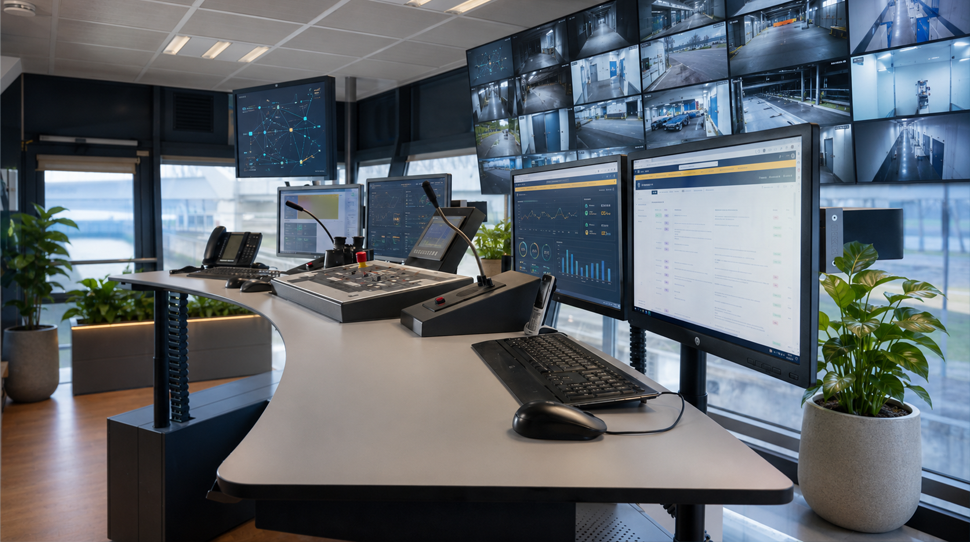
In an dispatch or control room, everything revolves around supreme concentration and the ability to make rapid decisions. While the layout is often highly functional and technologically advanced, the human factor must never be overlooked. A simple addition with a major impact is the introduction of plants. Incorporating greenery into the workplace is not just about aesthetics; it is a direct investment in the alertness and overall health of your operators.
Four Reasons Why Greenery Boosts Alertness in the Control Room
While a robust technical setup lays the foundation for a well-functioning control room, it is the physical environment that dictates how long an operator can sustain peak performance. The presence of plants breaks up the sterile atmosphere of a space dominated by screens and hardware. This natural addition to the workstation fosters a healthier indoor climate and sharpens focus during the most critical moments of a shift.
1. Natural Air Purification for Better Focus
Control rooms are frequently enclosed spaces where vast amounts of electronic equipment emit heat and static electricity. This can lead to dry air and elevated CO2 levels, which fuel fatigue and headaches. Certain plant species, such as the Snake Plant (Sansevieria) or Peace Lily, act as natural air filters. They break down harmful substances and increase humidity, helping operators stay fresh and sharp for longer during intensive shifts.
2. Stress Reduction in a High-Pressure Environment
Working in a control room inevitably involves high-stress situations. Scientific research from the University of Michigan demonstrates that the presence of natural elements reduces physiological stress. Simply looking at greenery can lower blood cortisol levels by an average of 21% per hour. In this way, plants serve as a visual anchor of calm in an environment crowded with monitors and complex dashboards, helping operators transition back to a state of calm focus more quickly after an incident.
3. Enhanced Acoustics
Noise control is essential in a space where clear communication is mission-critical. Hard surfaces like walls, floors, and technical furniture reflect sound, which can cause an agitating echo. Plants—and vertical green walls in particular—act as natural sound absorbers. They help dampen background noise, ensuring conversations between operators remain clear while enhancing the overall sense of tranquility in the room.
4. Relief from 'visual fatigue'
Operators spend hours staring at high-contrast screens, which causes digital eye strain. Green is the most restful color for the human eye. By strategically placing plants within sightlines—such as next to a video wall or between workstations—you provide the eyes with a natural recovery break. Glancing away from the monitor to look at a living organism helps relax the eye muscles, which is vital for maintaining optimal visual perception.
Integration into the workstation concept
When designing a control room, it is crucial that greenery does not obstruct critical operations. Opt for low-maintenance plants that thrive in low-light conditions, or implement moss walls that require no watering at all. This allows you to reap all the benefits of nature without compromising the technical integrity of the working environment.
By bringing nature indoors, you create a space where technology and biology work in synergy. The result? Lower absenteeism, higher employee satisfaction, and above all, a team that performs at its best under any circumstances.